


Honingbijen en slimme sensortechnologie


Onderzoek naar slimme sensoren om honingbijen beter te begrijpen en te beschermen. Steun biodiversiteit en wetenschap.


🌼 Waarom honingbijen zo belangrijk zijn
Honingbijen zijn kleine helden. Ze bestuiven planten, houden onze natuur in balans en spelen een grote rol in wat wij dagelijks eten. Maar hun leefomgeving staat onder druk door klimaatverandering, pesticiden en verlies aan biodiversiteit. Daarom werk ik aan een nieuwe manier om bijen beter te begrijpen én te beschermen.
🐝 Wat dit onderzoek wil bereiken
Het doel is eenvoudig: meer inzicht krijgen in de gezondheid van bijenvolken. Hoeveel voedsel brengen bijen binnen? Hoe verandert hun gedrag door omgeving, klimaat of ziektes? Hoe kunnen we problemen sneller opsporen?
Dit onderzoek heeft geen commercieel doel. Het draait volledig om biodiversiteit, wetenschap en het beschermen van een van de belangrijkste bestuivers op aarde.
🔧 Slimme sensor: hoe werkt het?
Tijdens mijn masterproef ontwikkelde ik een slimme sensor die meet welke lading een honingbij meebrengt wanneer ze terugkeert naar de kast. Dat kan gaan om nectar, pollen, water of propolis. Deze stoffen vertellen veel over de activiteit en gezondheid van de kolonie.
De technologie werkt op capacitieve sensormeting. Rond een kleine buis wordt koperdraad gewikkeld die fungeert als sensor. Wanneer een bij door de buis kruipt, verandert de elektrische capaciteit van de spoel. Die verandering wordt elektronisch gemeten en gekoppeld aan de massa en het type lading dat de bij op dat moment vervoert.
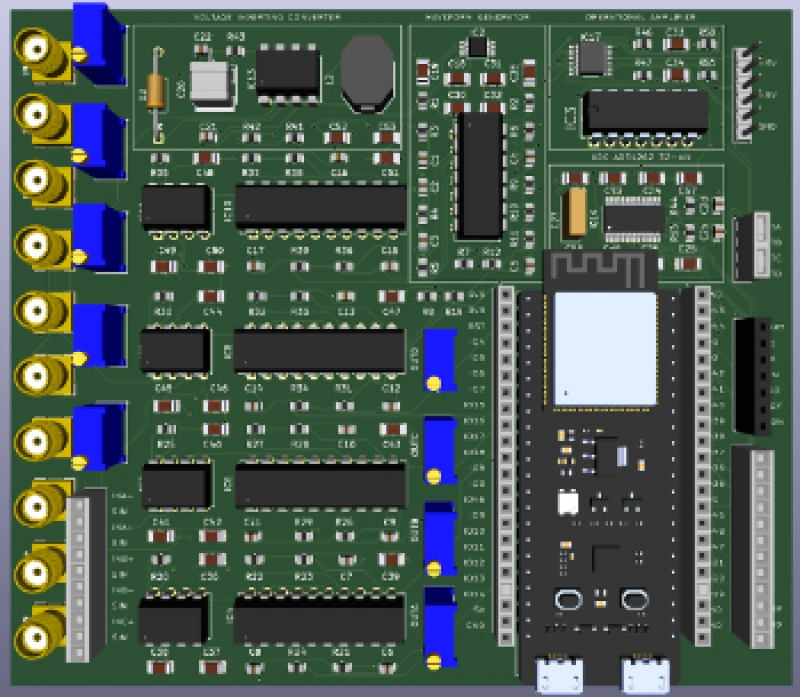
🟩 PCB 1 – Eerste prototype (gerealiseerd)
PCB 1 is de eerste versie van de meetelektronica. Deze printplaat werkt en heeft al waardevolle resultaten opgeleverd, maar moet worden verbeterd op vlak van:
- signaalstabiliteit
- ruisonderdrukking
- afscherming
- nauwkeurigheid
PCB 1 is dus een functioneel prototype, maar nog niet optimaal voor langdurige veldmetingen.
🟩 PCB 2 – Verbeterde versie (nog te realiseren)
PCB 2 is de geoptimaliseerde opvolger van het eerste prototype. Deze nieuwe versie bevat:
- een betere layout om storingen te verminderen
- verbeterde afscherming van de sensorlijn
- nauwkeurigere meetversterkers
- stabielere referentie‑elektronica
PCB 2 moet nog geproduceerd en getest worden. Dit is een cruciale stap om de technologie klaar te maken voor echte toepassingen bij imkers.
🔬 Waarom steun nodig is
Met extra steun kan ik dit onderzoek verder uitbouwen. De ontwikkeling van de sensor vraagt meerdere iteraties: PCB 1 is het eerste prototype, PCB 2 is de verbeterde opvolger, en er zullen nog bijkomende versies volgen tot de technologie volledig stabiel en nauwkeurig is.
Steun helpt om:
- nieuwe PCB‑versies te ontwerpen en produceren
- de meetopstelling verder te verfijnen
- praktijktesten bij imkers uit te voeren
- meer data te verzamelen om bijen nog beter te begrijpen en te beschermen
Hoe meer we leren over deze dieren, hoe beter we hun gezondheid en onze biodiversiteit kunnen veiligstellen.
🤝 Hoe jij kan helpen
Wie dit project steunt, draagt bij aan een toekomst waarin bijen veilig en gezond kunnen blijven. Elke bijdrage, hoe klein ook, helpt om dit onderzoek verder te zetten en een verschil te maken voor onze natuur.
🌼 Why honeybees are so important
Honeybees are small heroes. They pollinate plants, keep our natural environment in balance, and play a major role in the food we eat every day. But their habitat is under pressure due to climate change, pesticides, and loss of biodiversity. That is why I am working on a new way to better understand and protect bees.
🐝 What this research aims to achieve
The goal is simple: gaining more insight into the health of bee colonies. How much food do bees bring in? How does their behavior change due to environment, climate, or diseases? How can we detect problems more quickly?
This research has no commercial purpose. It is entirely focused on biodiversity, science, and protecting one of the most important pollinators on Earth.
🔧 Smart sensor: how does it work?
During my master’s thesis, I developed an intelligent sensor that measures which load a honeybee carries when it returns to the hive. This can be nectar, pollen, water, or propolis. These substances reveal a lot about the activity and health of the colony.
The technology is based on capacitive sensing. Copper wire is wound around a small tube, forming the sensor. When a bee passes through the tube, the electrical capacitance of the coil changes. This change is measured electronically and linked to the mass and type of load the bee is carrying at that moment.
🟩 PCB 1 – First prototype (completed)
PCB 1 is the first version of the measurement electronics. This circuit board works and has already produced valuable results, but it needs improvement in terms of:
- signal stability
- noise reduction
- shielding accuracy
PCB 1 is therefore a functional prototype, but not yet optimal for long-term field measurements.
🟩 PCB 2 – Improved version (to be developed)
PCB 2 is the optimized successor to the first prototype. This new version includes:
- a better layout to reduce interference
- improved shielding of the sensor line
- more accurate measurement amplifiers
- more stable reference electronics
PCB 2 still needs to be produced and tested. This is a crucial step to prepare the technology for real-world use by beekeepers.
🔬 Why support is needed
With additional support, I can further expand this research. Developing the sensor requires multiple iterations: PCB 1 is the first prototype, PCB 2 is the improved successor, and more versions will follow until the technology is fully stable and precise.
Support helps to:
- design and produce new PCB versions
- further refine the measurement
- setup conduct practical tests with beekeepers
- collect more data to better understand and protect bees
The more we learn about these animals, the better we can safeguard their health and our biodiversity.
🤝 How you can help
Anyone who supports this project contributes to a future in which bees can remain safe and healthy. Every contribution, no matter how small, helps to continue this research and make a difference for our natural environment.


